Introduction
The dentist has just extracted a tooth. Or you have been living with a gap for months, hoping it would not cause problems. Now you are researching your options, and you have discovered three paths: dental implants, dental bridges, and dentures. You have also discovered that they are very different in price, in what the procedure involves, and in what you can expect ten years from now.
The cost difference is immediately obvious. A dental implant costs more upfront than a bridge, which costs more implants or dentures. That hierarchy is real. But the relevant comparison. The one that actually helps you make an informed decision. is not what each option costs in month one. It is what each option costs across ten to fifteen years, what it does to your jawbone during that time, what it does to adjacent teeth, how it feels in daily life, and what happens when something goes wrong.
The One Factor That Changes Every Comparison: Bone Loss
When a tooth is extracted, the jawbone that surrounds and supports that tooth’s root receives no more mechanical stimulation. Bone that is not stimulated is resorbed. The body progressively dismantles it. In the first year after extraction, approximately 25% of jawbone volume is lost. Over the following years, this resorption continues.
This bone loss matters for three critical reasons:
- It affects facial appearance. Bone supports the overlying soft tissue. When bone recedes, the cheeks can appear sunken, the chin can rotate upward, and the face develops a “collapsed” appearance. a hallmark of long-term tooth loss in conventional denture wearers.
- It makes future implant treatment harder. If you choose a bridge now and want an implant later. Or if the bridge fails in 10 years. The bone loss during the bridge’s lifetime may mean you now need bone grafting before an implant can be placed.
- Only implants prevent it. A dental implant’s titanium post transmits mechanical loading forces into the jawbone during chewing. replicating the stimulation that the natural tooth root provided. Bridges and conventional dentures do not do this.
Option 1: Dental Implants. The Clinical Deep Dive
Category: Gold Standard. Most Evidence
A dental implant replicates the entire structure of a natural tooth. both the root and the crown. independently of every other tooth in the mouth. A titanium post (the implant fixture) is placed surgically into the jawbone at the extraction site. Over 3–6 months, the bone cells grow into and around the implant’s textured surface in a process called osseointegration, literally, bone fusion with the titanium. Once osseointegration is complete, a custom-fabricated crown is attached to the implant via an abutment connector. The result functions, feels, and is cleaned exactly like a natural tooth.
CLINICAL EVIDENCE
Published evidence (Jung et al., 2012; Pjetursson et al., 2015): Dental implants have a 10-year survival rate of 94–98%. With proper care, implants can last 25 years or a lifetime. A cost-effectiveness modelling study published in PubMed concluded that “implant as the first-line strategy appears to be the dominant strategy, considering the lower overall costs and the higher success rate.”
KEY DETAILS
| Treatment Timeline: 3–6 months (osseointegration). Immediate Implant loading available in select cases. Lifespan: 25+ years or lifetime (fixture); 15–20 years (crown replacement) Bone Preservation: Prevents bone resorption. the only option that does Adjacent Teeth: Not involved. Healthy teeth stay completely untouched Maintenance: Brush and floss normally; professional cleaning every 6 months; annual X-ray |
ADVANTAGES
- Preserves jawbone. The only tooth replacement option that does
- Does not involve or damage adjacent teeth
- Highest long-term survival rate (94–98% at 10 years)
- Longest lifespan. 25+ years to lifetime
- Functions and feels like a natural tooth
- Provides proprioception (bite force feedback)
- Most cost-effective over 10–15 years in published economic modelling
- Supports facial structure by maintaining bone volume
LIMITATIONS
- Highest upfront cost
- Requires surgery under local anaesthesia
- 3–6 month healing period before final crown
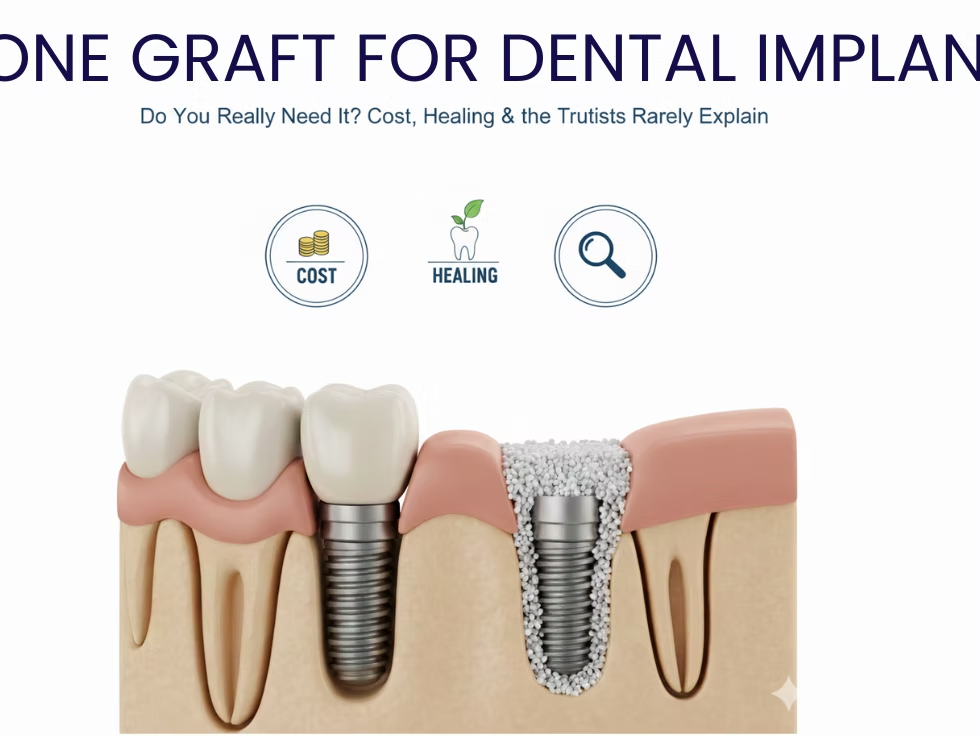
- Bone grafting may be needed if the bone volume is insufficient
- Not suitable for patients with uncontrolled diabetes, active cancer treatment, or severe immunosuppression
- Small risk of peri-implantitis (gum disease around the implant) requiring ongoing monitoring
Option 2: Dental Bridges. The Clinical Deep Dive
Category: Solid Alternative. Faster and Lower Upfront Cost
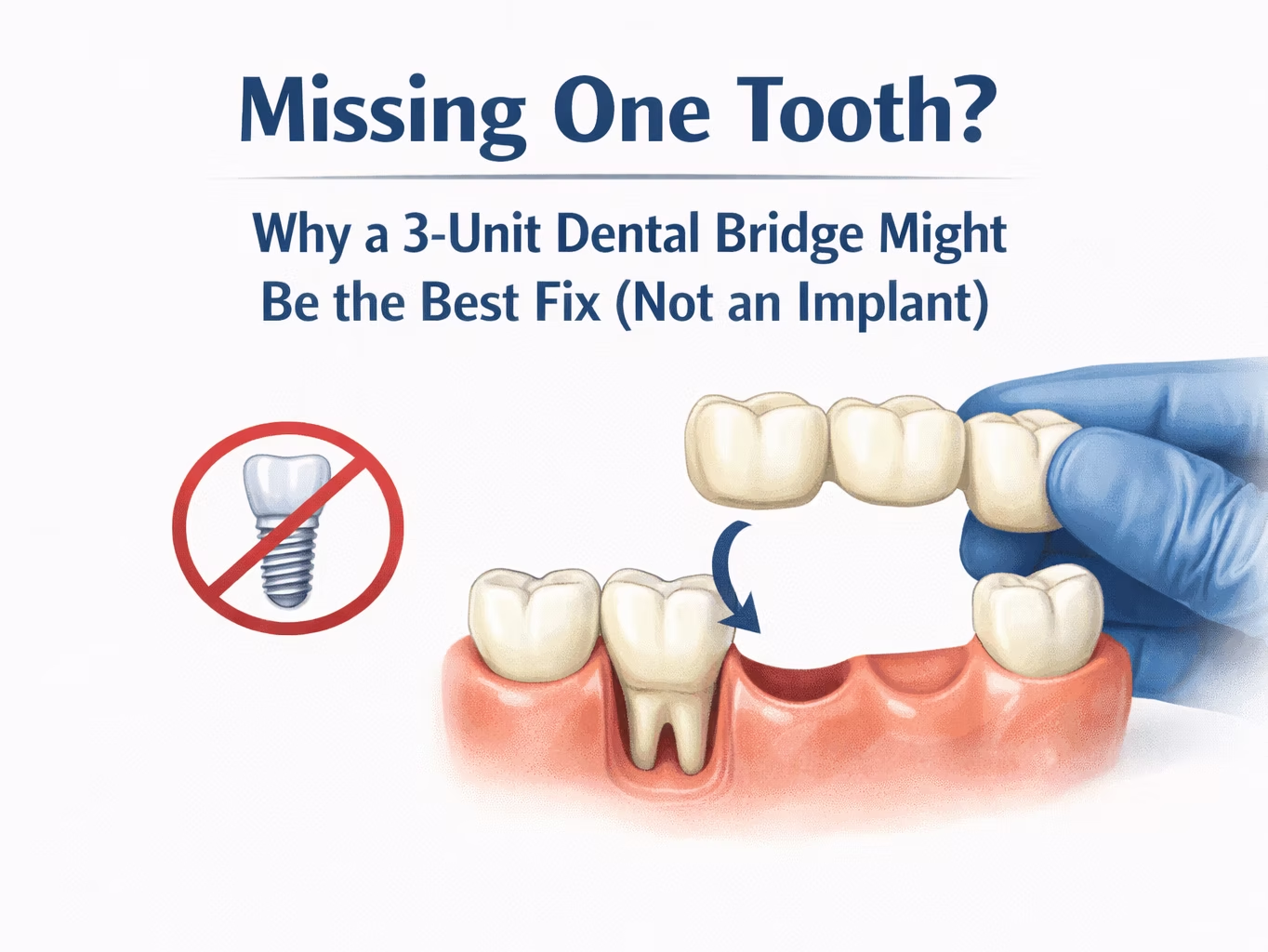
A traditional dental bridge consists of three or more crowns fused. a false tooth (pontic) in the middle replacing the missing tooth, with crowns on either side anchored to the adjacent natural teeth (abutment teeth). To place the bridge, the abutment teeth must first be permanently reduced. ground down by approximately 60–75% of their original structure to create stumps over which the bridge crowns will fit.
THE ABUTMENT TOOTH ISSUE. WHAT PATIENTS ARE NOT ALWAYS TOLD
The permanently ground-down abutment teeth are the single most important clinical consideration in the bridge decision. These teeth are healthy before the bridge is placed. They are permanently and irreversibly altered by the bridge procedure. The reduction removes the enamel and most of the dentine from each abutment tooth, placing them under crowns for the rest of their functional life.
Published data show that approximately 30% of bridge abutment teeth require root canal treatment within 5–7 years of bridge placement. When an abutment tooth fails, the entire bridge is lost.
Published evidence (Pjetursson et al., 2015): Dental bridges have a 10-year survival rate of 72–87%. meaning up to 28% of bridges have failed within 10 years.
KEY DETAILS
| Treatment Timeline: 2–3 weeks (preparation, lab fabrication, cementation) Lifespan: 8–15 years (replacement required) Bone Preservation: None. The bone continues to resorb under the pontic Adjacent Teeth: Permanently and irreversibly ground down Maintenance: Floss threader under pontic daily; professional cleaning every 6 months |
ADVANTAGES
- Lower upfront cost than implants
- Faster treatment. completed in 2–3 weeks
- No surgery required
- Fixed (not removable). good stability and aesthetics
- Well-suited when adjacent teeth already need crowns
- Covered partially by some dental insurance plans
- Appropriate when implants are medically or anatomically not feasible
LIMITATIONS
- Permanently damages healthy adjacent teeth
- 30% of abutment teeth need a root canal within 5–7 years
- Does not prevent bone loss under the pontic
- Requires replacement every 8–15 years
- Long-term total cost often exceeds the implant when replacements and abutment complications are included.
- Cleaning is more demanding than a natural tooth or an implant
- If one abutment tooth fails, the entire bridge may be lost
WHEN A BRIDGE IS THE RIGHT CHOICE
- Adjacent teeth are already heavily restored, cracked, or need crowns. The bridge serves a dual purpose
- Insufficient bone volume that would require complex grafting to support an implant
- Medical conditions that contraindicate implant surgery
- Patient preference for a non-surgical option with a clear understanding of trade-offs
- Geriatric patients where the 8–15 year lifespan is adequate for their planning horizon
Option 3: Dentures. The Clinical Deep Dive
Category: Most Affordable. Removable Prosthetic
Conventional Full Dentures
A complete (full) denture replaces all teeth in one arch and rests entirely on the gum and residual bone ridge. It is removed daily for cleaning. The fundamental problem with conventional full dentures is progressive bone loss. With no roots to stimulate it, the bone ridge beneath the denture continues to resorb over the years. As the bone shrinks, the denture fit loosens, requiring relines every 2–3 years and a complete remake every 5–8 years.
Partial Dentures
A removable partial denture (RPD) replaces one or more missing teeth when some natural teeth remain, using metal clasps around adjacent teeth for retention. RPDs are the most affordable option but the least comfortable. Like full dentures, RPDs do not prevent bone loss at the extraction sites.
Implant-Supported Dentures (Overdentures)
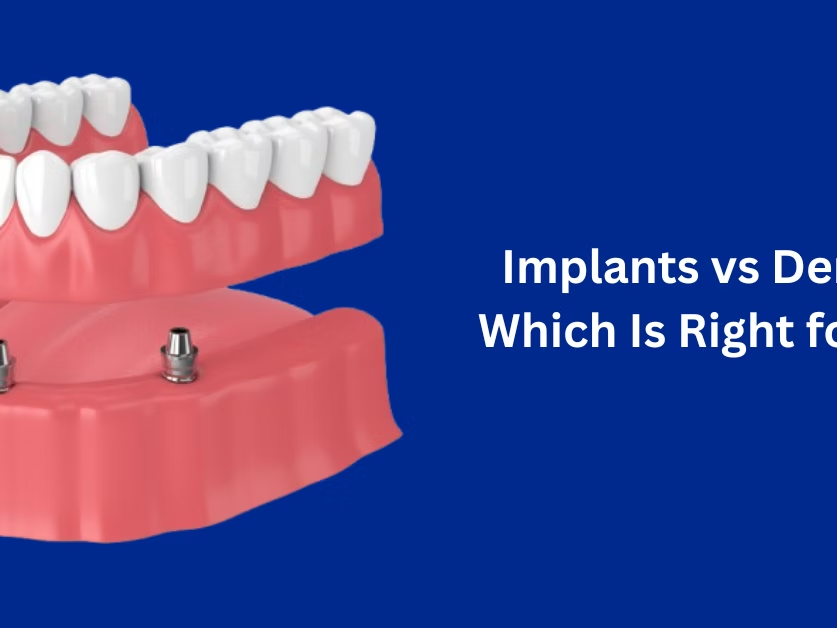
Implant-supported dentures combine the affordability of a denture prosthetic with the stability and bone preservation of dental implants. Two to four implants per arch are placed, and the denture snaps onto these implants. The implants prevent most of the bone resorption problem, provide dramatically better stability during eating and speaking, and eliminate the embarrassment of loose dentures. An excellent middle-ground solution for patients who cannot afford All-on-4.
ADVANTAGES
- Lowest upfront cost. most accessible option
- No surgery required (conventional)
- Easier to repair and reline than fixed options
- Can replace multiple or all missing teeth
- Implant-supported versions dramatically improve stability
- Non-irreversible. Can be upgraded to implants later
LIMITATIONS
- Conventional: does not prevent bone resorption. accelerates it
- Fit loosens as bone recedes. requires relines and eventual remake
- Chewing efficiency was significantly reduced compared to natural teeth or implants
- Removable. social and psychological adjustment required
- Food restrictions necessary (hard, sticky, chewy foods)
- Can slip or move during eating and speaking
- Long-term bone loss makes future implant placement harder or impossible
Master Comparison: Implants vs Bridges vs Dentures
| Factor | Dental Implant | Dental Bridge | Denture (Conventional) |
|---|---|---|---|
| 10-Year Survival Rate | 94–98% | 72–87% | Variable (5–8 yr prosthetic) |
| Expected Lifespan | 25+ years/lifetime | 8–15 years | 5–8 years per prosthetic |
| Jawbone Preservation | Yes. fully preserved | No. progressive loss | No. accelerated loss |
| Adjacent Teeth Involved | None | Permanently altered | Clasps on remaining teeth (partial) |
| Surgery Required | Yes (minor, local anaesthesia) | No | No (conventional) |
| Treatment Timeline | 3–6 months | 2–3 weeks | 2–4 weeks |
| Chewing Efficiency | 90–100% of natural | 80–90% of natural | 20–40% of natural |
| Proprioception | Present | Reduced | Absent |
| Cleaning Method | Brush + floss normally | Floss threader under pontic | Remove; brush prosthetic |
| Removable? | No. fixed | No. fixed | Yes. removed daily |
| Feel / Comfort | Like a natural tooth | Natural; some restrictions | Foreign feel; loosens over time |
| Food Restrictions | Minimal | Some (very sticky/hard) | Significant |
| Insurance (India) | Rarely covered | Sometimes partial | Sometimes partial |
Key variables that determine 10-year cost:
- Abutment tooth complications: 30% of bridge abutment teeth need root canal within 5–7 years; if one abutment fails, the entire bridge is lost
- Bridge replacement cycle: A bridge lasting 10–12 years means at least one complete replacement before the 25-year mark, where a well-maintained implant is still functioning.
- Bone grafting costs from delayed treatment: Bone loss during the bridge’s lifetime may require grafting before implant placement
- Denture reline and remake cycles: Conventional dentures require relining every 2–3 years and a complete remake every 5–7 years.
For Multiple or All Missing Teeth: Full Arch Replacement Options
1. All-on-4 (Fixed Full-Arch Implant Solution)
All-on-4 uses four strategically placed implants per arch to support a fixed full-arch bridge. The patient has permanent, functional teeth that do not come out for cleaning. The implants prevent bone loss. Chewing efficiency approaches natural teeth. Ten-year survival rate above 94% (Malo et al., 2011). The gold standard for full-arch replacement in patients with adequate bone.
2. Implant-Supported Overdenture
Two to four implants per arch with a removable prosthetic that snaps onto them. Dramatically better stability than conventional dentures. Significantly reduces bone loss. The denture is still removed for cleaning. An excellent compromise between implant stability and conventional denture cost.
3. Conventional Complete Denture
Rests on the gum with no implant support. Progressive bone loss continues throughout the denture’s life. Fit is loose, requiring relines. The honest clinical framing: conventional dentures are the treatment of last resort for full-arch replacement, not the treatment of choice.
Clinical Decision Framework: Who Should Choose What
Choose a Dental Implant When:
- Adequate bone volume exists (or can be grafted)
- Adjacent teeth are healthy and should not be altered
- You are replacing a single tooth or 2–3 individual teeth
- You want the longest-lasting, most natural-feeling solution
- You are medically fit for minor oral surgery under local anaesthesia
- You are planning for the 15–25 year horizon, not just the next 5 years
- You have had a bridge fail and need a permanent solution
Choose a Dental Bridge When:
- Adjacent teeth are already heavily restored and need crowns anyway
- Bone volume is inadequate, and grafting is not desired or feasible
- Medical conditions contraindicate implant surgery
- A 2–3 week timeline is required (implant 3–6 months is not viable)
- Budget constraints make implant investment impossible currently
- You are in your 70s+ with a shorter tooth-use planning horizon
- Multiple missing teeth in a row where an implant-supported bridge is planned
Choose Dentures When:
- Multiple or all teeth are missing in one arch
- Bone loss is too severe for simple implant placement
- Budget is the primary constraint, and implant options are not feasible
- Medical health makes implant surgery inappropriate
- You prefer a non-surgical, reversible option
- Consider implant-supported overdentures once financially feasible. They dramatically improve outcomes
What Happens If You Don’t Replace a Missing Tooth at All?
Many patients choose to “wait and see” after an extraction. The clinical consequences are predictable:
- Bone resorption begins immediately: Within weeks, the jawbone starts to shrink. After one year, approximately 25% of bone volume is gone. This bone loss is permanent and progressive.
- Adjacent teeth drift: Without a tooth to occupy the space, the teeth on either side begin tilting into the gap. The opposing tooth begins to over-erupt into the space. Over 12–24 months, this creates significant alignment changes affecting the bite.
- Bite collapse: As adjacent teeth drift and the opposing tooth over-erupts, the overall bite balance changes. This creates uneven force distribution, accelerated wear on remaining teeth, and, in some cases, TMJ discomfort.
- The replacement becomes harder and more expensive: An implant placed in a fresh extraction socket is simpler and cheaper than one placed two years later in a resorbed ridge with drifted adjacent teeth. which may require bone grafting, orthodontic correction, and more complex surgical planning.
How Smile Stories Approaches Missing Tooth Replacement
At Smile Stories, missing tooth consultations follow a structured sequence:
- Clinical examination and X-ray (IOPA and/or OPG): Assessing bone volume, adjacent tooth condition, gum health, opposing tooth position, and existing restorations
- Honest clinical discussion: Explaining all three options with specific advantages and trade-offs for your case
- No pressure decision: You leave with the information needed to decide; no same-visit commitment pressure.