INTRODUCTION
It never fails—dental pain has a way of hitting at the worst possible moments. Maybe it’s a Friday night, a Sunday afternoon, or 2 AM, when Whitefield seems to be fast asleep. Suddenly, you’re in pain, you’re anxious, and you just want to know: What is happening to my tooth, and how can I get relief?
You aren’t alone, and you don’t have to guess what to do next. Let’s walk through exactly what you need to know about emergency root canal treatment, how to handle the pain right now, and how to get the help you need when it matters most.
WHAT IS AN EMERGENCY ROOT CANAL?
A root canal treatment — clinically called endodontic therapy — is a procedure that removes infected or severely inflamed tissue from inside the tooth. At the center of every tooth lies the pulp: a collection of nerves, blood vessels, and connective tissue. When bacteria reach this inner chamber through deep decay, a crack, or trauma, the pulp becomes infected and inflamed.
The pain associated with this infection is typically severe, persistent, and worsening — particularly at night when lying flat increases blood pressure to the inflamed area. Left untreated, the infection can spread through the root tip into the surrounding bone, forming a dental abscess. From there, without intervention, infection can spread to adjacent tissue structures.
An emergency root canal addresses this crisis directly. The dentist removes the infected pulp, cleans and disinfects the root canal system, and seals the tooth — ending the active infection and relieving the pain that has made the situation unbearable. This is not an elective procedure. In the presence of active pulpal infection or abscess, it is a clinical necessity.
The goal of emergency endodontic treatment is twofold: to relieve acute pain and to preserve the natural tooth. Extracting the tooth would also end the infection, but would create a gap requiring replacement — adding complexity and long-term consequences. Wherever clinically possible, tooth preservation through root canal treatment is the preferred clinical approach.
SIGNS YOU MAY NEED EMERGENCY ROOT CANAL TREATMENT
Not every toothache requires an emergency root canal. But certain symptoms — particularly in combination — are strong indicators that the dental pulp is infected or has died, and that waiting is not a safe option.
SEEK EMERGENCY DENTAL CARE IF YOU EXPERIENCE:
1. Severe, Constant Tooth Pain
Pain that does not respond to over-the-counter pain relief, does not ease with time, and prevents you from sleeping, eating, or working normally. Unlike a mild sensitivity that comes and goes, infected pulp produces unrelenting, throbbing pain that escalates rather than fades.
2. Prolonged Sensitivity to Temperature
A normal tooth may briefly respond to hot or cold. An infected or dying pulp produces sensitivity that lingers for 30 seconds or more after the temperature stimulus is removed — or becomes worse rather than better when exposed to heat or cold.
3. Facial or Gum Swelling
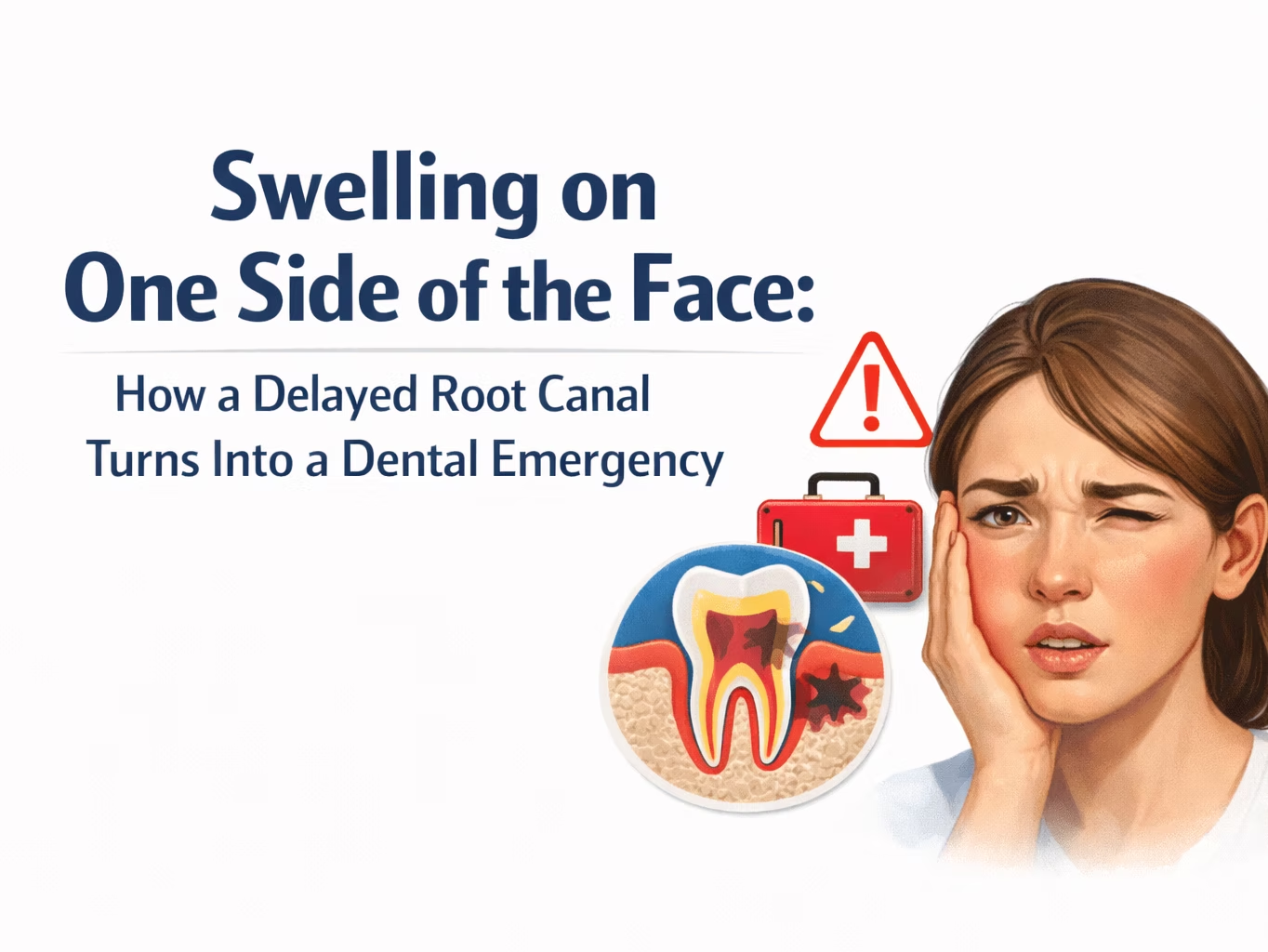
Visible swelling of the cheek, jaw, or gum near the affected tooth indicates that infection has spread beyond the confines of the root. Swelling that is spreading, affecting both sides of the jaw, or moving toward the neck or eye area is a medical emergency — go directly to a hospital.
4. Dental Abscess
A dental abscess is a pocket of pus at the root tip caused by bacterial infection. It may be visible as a swelling of the gum, or may cause generalized facial swelling. An abscess will not resolve without professional dental treatment.
5. Pus or Discharge
Visible pus or a persistent bad taste in the mouth — particularly near a painful tooth — indicates active infection and drainage. This requires prompt clinical evaluation.
6. Fever Alongside Tooth Pain
Fever in the context of dental pain suggests the infection may be spreading systemically. This combination requires urgent assessment — the same day, not the next morning.
7. Darkening of the Tooth
A tooth that has recently changed colour — becoming grey, brown, or noticeably darker than adjacent teeth — may indicate that the pulp has died. A dead tooth requires root canal treatment even if active pain is no longer present.
8. Difficulty Chewing or Biting
Extreme sensitivity or pain when biting down on the affected tooth, or the inability to eat on one side, are common features of advanced pulp inflammation or a periapical abscess.
IMPORTANT: If tooth pain is accompanied by difficulty breathing, difficulty swallowing, or swelling in the neck or throat area — do not go to a dental clinic. Go directly to the nearest hospital emergency department. These signs indicate the infection may be affecting the airway.
COMMON CAUSES OF EMERGENCY ROOT CANAL TREATMENT
Understanding what caused the infection helps both patient and dentist assess treatment complexity and plan the most effective response.
1. Deep Tooth Decay
The most common cause. Dental caries (decay) that progresses through the enamel and dentin layers eventually reaches the pulp. This progression can be painless for a surprisingly long time — many patients report no symptoms until the decay is already well into the inner tooth. Once bacteria reach the pulp, infection and inflammation begin.
2. Dental Trauma
A fall, sports impact, road accident, or blow to the face can fracture or displace a tooth — and damage the blood supply to the pulp in the process. In some cases, the pulp begins to die weeks or months after the trauma, without any acute impact on the tooth’s external appearance.
3. Cracked or Fractured Tooth
A crack in the tooth that extends into the root allows bacteria to travel directly into the pulp. Cracked tooth syndrome is notoriously difficult to diagnose because the crack may be invisible on X-rays and the pain is often inconsistent — sharp when biting in a specific direction, then disappearing.
4. Failed or Leaking Restorations
Old or deteriorating fillings and crowns can develop microleakage — allowing bacteria to penetrate the tooth beneath the restoration. This is a common cause of infection in teeth that have had previous dental work.
5. Untreated Cavities
A small cavity, if ignored over months or years, will inevitably penetrate deeper layers of the tooth. What begins as a manageable filling becomes a root canal — a clinical reality that underscores the value of regular dental check-ups at a dental clinic in Whitefield or nearby areas including Kadugodi, Hoodi, and EPIP Zone.
6. Previous Dental Procedures
In some cases, a tooth that has had multiple dental procedures over the years becomes increasingly susceptible to pulp irritation and eventual infection. This is not a failure of dental treatment — it reflects the cumulative biological stress the tooth has experienced.
WHAT HAPPENS DURING AN EMERGENCY APPOINTMENT?
Understanding each step of the emergency appointment reduces anxiety and sets accurate expectations. Here is the clinical sequence you can expect:
Step 1: Clinical Examination
The dentist begins with a visual examination of the mouth, affected tooth, and surrounding tissue. Percussion tests (tapping the tooth), temperature tests, and pressure assessment help identify the source and severity of the problem.
Step 2: Digital X-Rays
Digital radiographs are taken to visualize the root structure, canal anatomy, periapical bone (the bone around the root tip), and extent of any infection. This step is essential — no responsible dentist will recommend root canal treatment without imaging. In some complex cases, a CBCT (Cone Beam CT) scan may be needed for three-dimensional assessment.
Step 3: Diagnosis and Treatment Discussion
Based on the examination and imaging, the dentist confirms whether root canal treatment is the appropriate intervention, whether immediate treatment is possible in this session, and whether emergency management or definitive treatment will be performed.
Step 4: Local Anaesthesia
A local anaesthetic is administered to completely numb the affected tooth and surrounding area. Modern anaesthetic techniques are highly effective, and topical gel is applied before the injection to minimize sensation. You should not feel pain during the procedure itself. If you do at any point, signal the dentist immediately — more anaesthetic can be given.
Step 5: Isolation
A rubber dam (a thin rubber sheet) is placed around the tooth to isolate it from saliva and maintain a sterile field. This is a standard of care in endodontic treatment, not an optional step.
Step 6: Access and Pulp Removal
The dentist creates a small opening through the crown of the tooth to access the pulp chamber. The infected or inflamed pulp tissue is removed from the pulp chamber and each root canal using fine endodontic instruments.
Step 7: Canal Cleaning, Shaping, and Disinfection
The root canals are carefully shaped using rotary instruments and thoroughly irrigated with disinfecting solutions — most commonly sodium hypochlorite — to eliminate bacterial contamination. This is the most clinically critical step, directly determining long-term treatment success.
Step 8: Temporary or Permanent Restoration
In an emergency setting, the dentist may:
a) Place a medicated dressing inside the canals and seal with a temporary filling, scheduling a second appointment to complete obturation (canal filling) — the multi-visit approach
b) Complete the root canal in a single visit by filling the canals with gutta-percha if the case is suitable for single-sitting RCT
Step 9: Prescription if Required
Antibiotics may be prescribed if infection has spread beyond the tooth. Pain relief medication may also be provided for the post-procedure period.
Step 10: Crown Planning
After root canal treatment, the treated tooth requires a permanent restoration — almost always a dental crown for molar and premolar teeth — to protect against fracture. Crown placement is typically a separate appointment scheduled after the root canal is complete and healing has begun.
CLINICAL NOTE: Completing a root canal does not mean the treatment journey is over. Crown placement is typically the next necessary step. Delay between root canal completion and crown placement increases the risk of tooth fracture — particularly in back teeth bearing chewing load.
WHY WEEKEND AND LATE-NIGHT DENTAL VISITS ARE DIFFERENT
Patients searching for emergency dental treatment in Whitefield at 11 PM on a Saturday night are in a fundamentally different situation than those calling to schedule a routine appointment on a Tuesday morning. Understanding these differences helps set accurate expectations.
1. Emergency Slot Availability
Standard clinic appointment slots are filled days or weeks in advance. Emergency cases are accommodated in dedicated emergency slots — or require the clinic to hold an appointment specifically for your arrival. Late-night and weekend dental emergency availability varies significantly between clinics. Always call ahead to confirm a dentist is physically available before travelling.
2. Urgency-Based Triage
Emergency appointments begin with rapid assessment of severity. A spreading facial abscess or airway compromise will be addressed differently — and more immediately — than severe tooth pain without systemic symptoms. The clinical team prioritizes based on risk, not queue order.
3. Immediate Pain Management vs Complete Treatment
At a late-night or weekend emergency visit, the clinical goal is often to address the acute emergency — relieve pain, manage active infection, stabilize the tooth — rather than complete the full root canal in a single extended session. Definitive treatment may be initiated immediately if appropriate, or the dentist may manage the acute crisis and schedule the full procedure for the next available weekday appointment when the full clinical team and equipment are available.
4. Staff Preparedness
Emergency dental clinics operating outside standard hours maintain a reduced team, typically consisting of the treating dentist and an essential assistant. While this is fully sufficient for emergency assessment and initial treatment, certain complex cases involving specialist referral or specific equipment may be better completed during standard clinic hours.
5. Documentation and Continuity of Care
When visiting an emergency clinic outside your regular dental practice, carry any available dental records, X-rays, or a list of prior treatments on the affected tooth. This information helps the emergency dentist make informed decisions quickly and avoids duplicating diagnostic work.
WHAT FACTORS INFLUENCE THE OVERALL TREATMENT JOURNEY?
Every root canal treatment — emergency or scheduled — is shaped by a set of clinical variables. Understanding these helps patients appreciate why treatment complexity differs from person to person and tooth to tooth.
1. Tooth Location and Anatomy
Front teeth (incisors and canines) typically have a single canal and a relatively straightforward root anatomy. Premolars may have one or two canals. Molars — the large back teeth that bear the most chewing force — routinely have three or four canals, each requiring individual cleaning and filling. Upper molars in particular are known for complex, curved canal anatomy. The more complex the canal system, the more time, skill, and instruments the procedure requires.
2. Severity and Extent of Infection
A tooth with early pulpitis (inflammation of the pulp without spreading infection) is managed differently than one with a large periapical abscess or significant bone loss around the root tip. Advanced infection may require antibiotic therapy alongside dental treatment, and may also necessitate multiple visits to allow adequate resolution before final canal filling.
3. Emergency Timing
Late-night and weekend appointments may involve immediate emergency stabilization with definitive treatment scheduled as a follow-up. The total number of appointments, and the interval between them, forms part of the overall treatment journey.
4. Need for Retreatment
A tooth that has had prior root canal treatment and has subsequently developed reinfection — called a retreatment case — is clinically more complex. The previous filling material must be removed, the canals re-cleaned and reshaped, and the underlying cause of failure identified and addressed. Retreatment cases often require specialist endodontist involvement.
5. Diagnostic Imaging Requirements
Standard periapical X-rays provide essential two-dimensional information. Teeth with complex anatomy, suspected additional canals, or significant periapical pathology may require CBCT imaging — a three-dimensional scan that provides detail unavailable on standard X-rays. This additional diagnostic step adds clinical value and may influence treatment planning.
6. Post-Treatment Restoration
Following completion of root canal treatment, the tooth requires a permanent restoration. For front teeth, this may be a composite filling with or without a crown. For back teeth bearing significant biting force, a full dental crown is almost always recommended. The crown placement requires a separate appointment and additional clinical work.
7. Medications
Management of active infection or significant post-procedure discomfort may involve prescriptions for antibiotics, anti-inflammatory medications, or analgesics. These form part of the comprehensive management of the dental emergency.
8. Specialist Involvement
Straightforward root canals in healthy teeth with uncomplicated anatomy are managed by general dentists with endodontic training. Cases involving retreatment, calcified canals, very curved roots, or significant diagnostic uncertainty may be referred to an endodontist — a specialist who has completed 2+ years of postgraduate training focused exclusively on root canal procedures.
Follow-Up Appointments
Root canal treatment — particularly in emergency settings — typically initiates a sequence of clinical visits rather than concluding in a single appointment. Expect at minimum:
- Emergency assessment and initial treatment
- Completion of root canal (if multi-visit approach was used)
- Crown preparation and fitting
- Follow-up review (at 3 months, 6 months, or 1 year depending on clinical complexity)
INSURANCE CONSIDERATION: If you hold dental insurance, contact your provider to understand which aspects of emergency root canal treatment are covered under your policy. Coverage varies significantly between plans and providers. Many policies cover routine endodontic treatment but apply specific conditions to emergency timing or specialist referral.
CAN YOU WAIT UNTIL MONDAY?
This is the question most patients in Whitefield are genuinely wrestling with on a Saturday night: is the pain bad enough to justify finding emergency care right now, or can it wait two days for the clinic to reopen?
The honest clinical answer is: it depends on the symptoms — and some symptoms clearly cannot wait.
DO NOT WAIT IF YOU HAVE:
Facial swelling, especially if it is spreading or affecting your ability to swallow or breathe. A dental abscess that has expanded beyond the tooth can compromise the airway in rare but documented cases. Increasing swelling with systemic symptoms (fever, general unwellness) is a medical emergency.
Fever alongside severe tooth pain. This combination suggests the infection is no longer localized to the tooth. Dental infections that spread through the fascial planes of the face and neck can become life-threatening without medical intervention.
Swelling that is growing visibly over hours. If swelling that was limited to the gum in the morning now involves your cheek by evening, the infection is actively progressing.
Uncontrolled, severe pain that does not respond to pain relief. If you cannot sleep, eat, or function, and over-the-counter pain relief is not providing adequate relief, emergency dental assessment is appropriate.
WAITING UNTIL MONDAY MAY BE ACCEPTABLE IF:
Pain is significant but manageable with over-the-counter pain relief and there is no associated swelling or fever. In this situation, over-the-counter ibuprofen (if you have no contraindications) and cold packs applied externally can provide temporary relief while you wait for a scheduled appointment.
Sensitivity without constant pain. A tooth that is sensitive to temperature but not throbbing constantly is less likely to represent a full-blown abscess and may be safely monitored over a day or two with careful symptom observation.
THE RISK OF WAITING: Even when symptoms seem manageable, dental infections can escalate unpredictably. An abscess that appears stable can double in size over 24-48 hours. If symptoms worsen, do not wait for Monday — seek emergency care.
WHAT YOU CAN DO BEFORE SEEING AN EMERGENCY DENTIST
While there is no home treatment that replaces professional dental care, certain safe measures can reduce discomfort while you arrange emergency treatment.
1. Over-the-Counter Pain Relief
Ibuprofen (an anti-inflammatory) is more effective for dental pain than paracetamol because it addresses both pain and the underlying inflammation. Take the appropriate dose for your age and weight as stated on the packaging. Do not take any medication you are allergic to, and check with a pharmacist if you are unsure about interactions with other medications you take.
2. Cold Compress
Applying a cold pack or ice wrapped in a cloth to the outside of the cheek for 15-20 minutes at a time can reduce swelling and provide temporary pain relief. Do not apply ice directly to the skin.
3. Salt Water Rinse
Gently rinsing the mouth with warm salt water (half a teaspoon in a glass of warm water) provides mild antibacterial benefit and can reduce gum irritation. Rinse gently — do not swirl forcefully, which increases pressure around an already-inflamed area.
4. Elevation
Lying flat increases blood pressure to the head, amplifying the throbbing sensation of tooth pain. Sleeping with your head elevated above heart level — supported by extra pillows — may reduce pain intensity enough to allow some rest.
5. Avoid Heat
Hot food, hot drinks, and heat applied to the face can increase blood flow to the inflamed area and worsen pain. Avoid anything hot until the tooth has been assessed.
WHAT NOT TO DO:
- Do not place aspirin or any painkiller directly on the gum next to the tooth — this can cause a chemical burn to soft tissue
- Do not probe or prod the area with fingers or objects
- Do not attempt to drain a swelling yourself
- Do not ignore spreading swelling in the hope it will resolve on its own
QUESTIONS TO ASK BEFORE BOOKING AN EMERGENCY APPOINTMENT
If you are calling a dental clinic in Whitefield, Marathahalli, Hope Farm, or anywhere in East Bangalore to arrange emergency care, these questions will help you evaluate whether the clinic is equipped for your needs:
1. Is emergency dental care available today / tonight?
Some clinics advertise emergency services but only during standard weekday hours. Confirm that a dentist is physically present and available to see you at the time you need care.
2. Can root canal treatment begin at this visit, or only assessment?
This clarifies whether you will leave with the acute problem addressed or with only a prescription and a future appointment.
3. Are digital X-rays available on-site?
Digital radiographs are essential for diagnosing the extent of root canal infection and planning treatment. A clinic without on-site imaging cannot safely initiate root canal treatment.
4. Will a temporary filling be placed if the root canal cannot be completed today?
After emergency pulp removal and disinfection, the tooth must be sealed. Confirm that the dentist will place a temporary restoration before you leave, rather than leaving the tooth open.
5. Will antibiotics or pain relief be prescribed if needed?
Understand whether the emergency appointment includes prescription of any medications required, and whether the dentist can explain when you should seek further care if symptoms do not improve.
6. What is the follow-up process?
Emergency treatment is typically the beginning of a clinical sequence. Ask how the next steps — completing the root canal, placing a crown — will be scheduled and approximately how many appointments to expect.
7. Is this a general dentist or an endodontist?
For straightforward cases, a general dentist with endodontic experience is appropriate. For complex cases — retreatments, calcified canals, diagnostic uncertainty — ask whether an endodontist is available or whether referral will be provided.
HOW TO REDUCE FUTURE DENTAL EMERGENCIES
An emergency root canal is almost always the end result of a problem that began subtly and progressed over months or years. Most dental emergencies are preventable with consistent proactive care.
1. Regular Dental Check-Ups
A dentist examining your teeth every 6 months can identify cavities, cracks, and early pulp changes before they become painful emergencies. The majority of root canal cases begin as small cavities or small cracks that a check-up would have detected. For patients in Whitefield, Varthur, Kundalahalli, and the broader ITPL corridor who work long hours and defer dental visits, this is the most impactful single change.
2. Treat Cavities Early
A cavity identified at a check-up requires a filling — a short, straightforward procedure. Left unaddressed for months, the same cavity may penetrate the pulp and require root canal treatment. The clinical and time investment for a filling is significantly less than for root canal treatment plus a crown. Treat cavities when they are small.
3. Do Not Ignore Tooth Sensitivity
Sensitivity to hot or cold that lingers, or pain when biting on a specific tooth, are early warning signs of pulp involvement. These symptoms should prompt a dental consultation — not over-the-counter pain relief as a long-term strategy.
4. Wear a Night Guard if You Grind Your Teeth
Teeth grinding (bruxism) — often occurring during sleep without awareness — creates micro-fractures in tooth enamel over time, wearing teeth down and making cracks that can extend into the pulp. A custom-fitted night guard worn during sleep protects teeth from this damage.
5. Protect Teeth During Physical Activity
A sports mouthguard reduces the risk of dental trauma — cracked, fractured, or knocked-out teeth — during contact sports and activities with fall risk. Dental trauma is one of the most common causes of pulp damage that eventually requires root canal treatment.
6. Maintain Consistent Daily Oral Hygiene
Brushing twice daily with fluoride toothpaste and flossing once daily removes the bacterial plaque that drives tooth decay. This is not a dental cliché — it is the evidence-based foundation of preventable oral health that the Indian Dental Association (IDA), American Association of Endodontists (AAE), and World Health Organization (WHO) consistently emphasize.
KEY TAKEAWAYS
- Emergency root canal treatment addresses infected or inflamed dental pulp — it ends the source of the pain, not just the symptom
- Severe, constant tooth pain, facial swelling, fever, pus, and difficulty swallowing are signs that require emergency care — do not wait for Monday
- Go directly to a hospital emergency department if you have difficulty breathing or swallowing alongside dental pain — this is a medical emergency, not a dental one
- The emergency appointment initiates a treatment sequence — the root canal, followed by a crown, followed by review appointments — rather than ending the process in one visit
- Multiple clinical factors shape the overall treatment journey: tooth anatomy, infection severity, imaging requirements, retreatment status, specialist involvement, and post-treatment restoration needs
- Late-night and weekend dental visits may involve emergency stabilization and initial management, with definitive treatment completed at a follow-up appointment
- Most dental emergencies are preventable through regular check-ups, early cavity treatment, mouthguards for bruxism, and consistent oral hygiene
- Always call ahead to confirm a dentist is physically available before travelling to an emergency clinic