You went through root canal treatment, the appointment, the discomfort, the healing, the crown. You did everything right. And then, months or years later, the pain came back.
That moment of recognition, the familiar ache on biting, the swelling near a tooth that was supposed to be fixed, the sinking feeling that something went wrong, is one of the most disorienting experiences a dental patient can have. It raises uncomfortable questions. Was the first treatment done poorly? Did the tooth get reinfected? Do you need to go through all of it again? And, most urgently: is extraction now inevitable?
The answer to that last question, in most cases, is no.
A failed root canal is not automatically a lost tooth. Non-surgical re-root canal treatment, endodontic retreatment, successfully resolves the majority of failed cases and gives the natural tooth a genuine second chance. This article explains what causes root canals to fail, what warning signs should prompt you to seek evaluation, what the retreatment process involves, and how Smile Stories handles same-day re-RCT for patients across Whitefield, Varthur, ITPL, and Mahadevapura.
Key Clinical Statistics at a Glance
| Statistic | Detail |
| 15–25% | Some root canals may eventually require retreatment (published endodontic research) |
| 42% | Of failed RCT cases have missed canals as the primary cause (Hoen & Pink study) |
| 76–86% | Success rate of non-surgical retreatment for periapical cases |
| 60–90 Minutes | Typical single-visit retreatment duration at Smile Stories |
What Is Re-Root Canal Treatment?
Re-root canal treatment, also called endodontic retreatment or re-RCT, is the procedure of reopening a tooth that has previously undergone root canal treatment, removing the existing filling material, thoroughly re-cleaning the entire canal system, and sealing it again with fresh material.
The procedure is indicated when the original root canal treatment has failed, meaning bacteria have persisted in, or re-entered, the root canal system and are causing ongoing infection, inflammation, or abscess formation at the root tip (the periapical region).
This is why retreatment should be performed by an experienced endodontist or a general dentist with specific retreatment training, not simply any dentist who offers root canal services.
Why Do Root Canals Fail? The 7 Most Common Causes
Understanding why root canals fail helps you ask better questions, both when evaluating whether your original treatment was done correctly, and when choosing who performs your retreatment.
1. Missed Canals
Root systems are anatomically complex. Upper molars typically have 3–4 canals; lower molars often have 3. A frequently missed canal is the MB2 (mesiobuccal second canal) of upper first molars, research shows it was missed in 42% of all endodontically failing teeth in one major prospective study (Hoen & Pink). Bacteria in missed canals continue to cause infection undetected.
2. Poor Obturation (Underfilling or Overfilling)
Gutta-percha filling material that does not reach the full length of the canal leaves a void where bacteria can survive. Overfilling pushes material beyond the root tip, causing irritation of periapical tissues and delayed healing. Both are radiographically detectable on a diagnostic X-ray.
3. Coronal Leakage
If the crown or filling placed after root canal treatment is delayed, poorly fitted, or cracks over time, bacteria from the mouth penetrate downward into the root canal system through the coronal seal. This is one of the most preventable causes of RCT failure, yet it accounts for a significant proportion of retreatment cases.
4. Bacterial Reinfection (Enterococcus faecalis)
The most commonly implicated bacterium in root canal failure is Enterococcus faecalis, a uniquely resistant organism that can survive in the harsh, nutrient-deprived environment of a sealed root canal. It resists standard calcium hydroxide dressings and can persist in dentinal tubules long after instrumentation. Advanced irrigation protocols are required to address it during retreatment.
5. Inadequate Canal Cleaning
If the original root canal treatment did not adequately instrument all portions of the canal, particularly the apical one-third, residual pulp tissue and bacteria survive. Without proper debridement and irrigation, the biological goal of root canal treatment (elimination of infection) is simply not achieved.
6. Broken Instrument in Canal
Occasionally, an endodontic file fractures inside the canal during the original treatment. If the broken instrument creates a block that prevents thorough cleaning of the apical portion, infection persists beyond the fragment. Retrieval or bypass of the fragment is often attempted during retreatment.
7. New Dental Decay
Even a perfectly executed root canal can fail years later if new decay develops around the crown margins, creating a pathway for oral bacteria to enter the root canal system. This is a patient care and maintenance failure rather than a procedural one, but the outcome (reinfection) is the same.
7 Warning Signs Your Root Canal May Have Failed
Root canal failure does not always present immediately after treatment. Reinfection can develop weeks, months, or in some cases years after the original procedure. These are the clinical signs that warrant same-day evaluation:
1. Pain or Tenderness When Biting
Pressure sensitivity on a previously treated tooth, especially if it worsens with chewing, is the most common early sign of periapical infection. The tooth itself has no nerve (it was removed during RCT), but the periodontal ligament and periapical tissue surrounding the root are innervated and respond to inflammation.
2. Swelling of Gum or Face (URGENT)
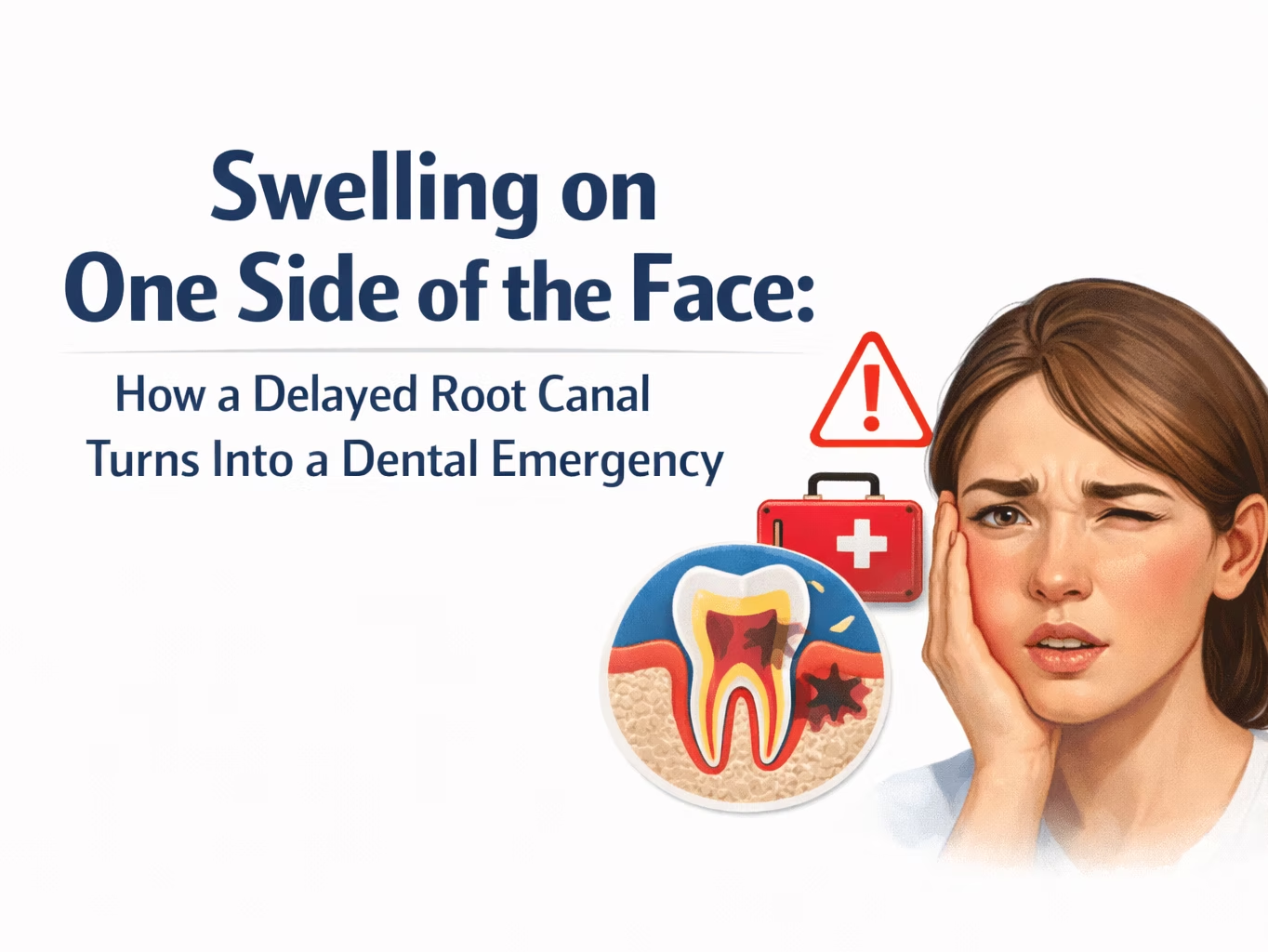
Swelling near the gumline of a root canal treated tooth, or facial swelling on the side of the treated tooth, indicates an active periapical abscess. This requires same-day dental evaluation. Do not wait for swelling to resolve on its own, it will not without treatment.
3. Pimple-Like Bump on the Gum (Sinus Tract)
A recurring pimple or bump (called a sinus tract or parulis) on the gum near the treated tooth, that may drain pus or fluid and then temporarily disappear, is a sign of a chronic periapical abscess. The infection is draining through a channel in the bone and gum tissue. The tooth needs retreatment even if the bump is painless.
4. Persistent Bad Taste or Odour
A recurring bad taste in the area of a treated tooth, despite normal oral hygiene, often indicates active bacterial infection draining into the mouth through a sinus tract. This is particularly noticeable first thing in the morning.
5. Return of the Original Toothache
A successfully treated root canal should be permanently painless. If the character of pain you had before the original treatment returns, even as a milder, duller ache, the nerve tissue may have been inadequately removed, or reinfection has developed in an untreated canal.
6. Darkening of the Tooth
Internal discolouration of a root canal treated tooth can indicate breakdown of residual pulp tissue or blood pigments within the root canal system. While not always a sign of active infection, progressive darkening should be evaluated alongside clinical and radiographic assessment.
7. Radiographic Shadow at Root Tip
A periapical radiolucency, a dark shadow visible on dental X-ray at the tip of the root, indicates bone destruction caused by the spread of infection from the root canal into the surrounding jawbone. This may be asymptomatic in chronic cases, making routine X-ray monitoring essential after root canal treatment.
How Re-Root Canal Treatment Is Performed at Smile Stories
Retreatment at Smile Stories follows a structured, evidence-based protocol. Here is exactly what happens from the moment you arrive to the moment the tooth is sealed and protected:
1. Step 1: Diagnostic X-Ray & Clinical Assessment
An IOPA (intra-oral periapical) X-ray is taken of the affected tooth. Smile stories team of dentists evaluates the quality of the original root canal filling, identifies periapical radiolucency (the infection shadow at the root tip), assesses for missed canals, checks the remaining crown structure, and determines whether the tooth is a candidate for retreatment or has a complicating factor such as a vertical root fracture that changes the treatment path. You receive a clear, honest explanation of what the X-ray shows before any decision is made.
2. Step 2: Local Anaesthesia, Fully Painless Procedure
The tooth and surrounding gum tissue are anaesthetised using local anaesthetic. With an infected tooth, achieving complete numbness sometimes requires supplemental anaesthetic techniques such as intraligamentary injection, we take the time needed to ensure you feel nothing before proceeding. The procedure does not begin until you confirm complete numbness. Retreatment under proper anaesthesia is no more uncomfortable than the original root canal, and in most cases, patients report it as easier.
3. Step 3: Access Opening & Existing Restoration Removal
The existing crown, post (if one was placed), and coronal filling are carefully removed to access the root canal system below. A rubber dental dam is placed around the tooth to isolate it from saliva and maintain a sterile field throughout the procedure, a non-negotiable infection control step in retreatment.
4. Step 4: Removal of Previous Gutta-Percha Filling
Using rotary retreatment files, specialised nickel-titanium instruments designed for removing set gutta-percha, the previous filling material is systematically removed from all canals. Solvent agents may be used to soften the gutta-percha and facilitate removal. This is technically the most demanding step of retreatment, as the filling must be removed without damaging the root canal walls. Magnification loupes significantly improve accuracy during this phase.
5. Step 5: Identification of Missed Canals
With the canals cleared of old filling material, Smile stories team of dentists systematically explores the canal system for previously missed or undertreated canals. In upper first molars, the MB2 canal, the most commonly missed canal in all of endodontics, is specifically searched for. Magnification enhances visibility of small canal orifices that are invisible to the naked eye. Finding and treating previously missed canals is often the single most important factor in retreatment success.
6. Step 6: Advanced Re-Cleaning & Irrigation Protocol
All canals, existing and newly identified, are re-instrumented to their full working length using rotary endodontic systems and thoroughly irrigated. The irrigation protocol uses sodium hypochlorite (NaOCl) to dissolve remaining organic tissue and kill bacteria, followed by EDTA to remove the smear layer and expose the dentinal tubules to disinfectants. This irrigation sequence is critical for addressing Enterococcus faecalis. In cases of significant periapical infection, a calcium hydroxide intracanal dressing may be placed for 1–2 weeks before final obturation.
7. Step 7: Re-Obturation & Coronal Seal
Once the canal system is confirmed clean and dry, it is filled with fresh gutta-percha and an appropriate sealer to create a hermetic, bacteria-proof seal of the entire canal length. A strong coronal seal is placed immediately, research consistently shows that delayed or inadequate coronal restoration leads to reinfection even after technically correct retreatment.
8. Step 8: Crown Restoration (Recommended Within 4–6 Weeks)
A retreated tooth requires a new dental crown to restore function and provide long-term protection. We will plan your crown appointment at Smile Stories at the same time as your retreatment, so you are not left with an unprotected tooth between visits. Zirconia crowns are recommended for posterior (back) teeth due to their fracture resistance and longevity.
Retreatment vs Extraction: How We Decide
This is the most consequential decision in a failed root canal situation. At Smile Stories, we will never recommend extraction without first honestly assessing whether retreatment is viable. Natural teeth are worth preserving, they are better than any artificial replacement.
Retreatment Is Typically the Right Choice When:
- The tooth has adequate remaining crown structure to be restored after retreatment
- There is no vertical root fracture (a fracture along the length of the root)
- The periodontal (gum and bone) support around the tooth is adequate
- The cause of failure is identifiable and addressable, missed canal, poor obturation, coronal leakage
- The patient is medically suitable for retreatment
- The patient’s bite and opposing teeth support keeping the tooth long-term
Extraction May Be Necessary When:
- A vertical root fracture is confirmed, fractures do not heal and the tooth cannot be saved
- Advanced periodontal disease has destroyed most of the supporting bone around the root
- The tooth is structurally non-restorable (too little tooth structure left after decay removal)
- Previous retreatment has already failed and apical surgery is also not possible
- There is severe bone destruction (large cyst) requiring surgical management alongside extraction
Treatment Option Comparison
| Factor | Re-Root Canal Treatment | Extraction + Implant | Extraction + Bridge |
|---|---|---|---|
| Preserves natural tooth | Yes | No | No |
| Preserves jawbone | Yes (root stimulates bone) | Yes (implant) | No, bone resorption occurs |
| Involves adjacent teeth | No | No | Yes (crowning adjacent teeth) |
| Treatment timeline | 1–2 visits (1–2 days) | 3–6 months | 2–4 weeks |
| Long-term success rate | 76–86% (periapical cases) | 95%+ at 10 years | Moderate, adjacent tooth risk |
Why Patients Choose Smile Stories for Re-Root Canal Treatment
1. Rotary Endodontics for Precision Retreatment
Smile Stories uses rotary nickel-titanium retreatment file systems, the current clinical standard for efficient, controlled removal of previous gutta-percha without over-instrumentation of canal walls. Rotary systems reduce treatment time significantly, allow greater consistency of canal cleaning, and are associated with fewer procedural errors. Combined with magnification, they allow systematic identification of missed canals that are the most common cause of retreatment cases.
2. Same-Day Emergency Appointments
Smile Stories maintains same-day appointment availability for emergency presentations, including failed root canal evaluation, pain management, and, where possible, same-day retreatment commencement.
3. Prevention-First Philosophy
Our clinical decision-making is built around saving natural teeth. We will not recommend retreatment when extraction is genuinely the better clinical choice, but we will always make the case for the natural tooth first, because no restoration fully replicates what your own tooth provides.
What to Expect After Re-Root Canal Treatment
Most patients are surprised by how manageable the post-retreatment period is. Here is an honest, day-by-day guide:
Day 1: Procedure Day
The anaesthetic wears off 2–4 hours after the procedure. As it does, mild soreness or dull aching in the treated tooth and surrounding area is normal, this reflects the body’s inflammatory response to the procedure, not a sign that something went wrong. Take prescribed pain relief (typically ibuprofen and/or paracetamol) proactively before the anaesthetic fully wears off. Eat soft foods on the other side. Avoid very hot beverages.
Days 2–5
Soreness typically peaks at day 2 and then progressively decreases. The tooth may feel slightly ‘high’ when biting, this is normal swelling and self-corrects. If it persists beyond 5 days, contact us to check the bite. Gum tenderness near the treated tooth may take 1–2 weeks to fully resolve as the infection drainage pathway closes.
Week 2–6
Most patients are comfortable eating normally within 1 week. During this period, the tooth remains temporarily sealed with a provisional filling, avoid hard or sticky foods on that side. We schedule your crown appointment 4–6 weeks after retreatment, once the initial healing period has passed.
3–6 Months
A follow-up X-ray at 3–6 months confirms that the periapical shadow (infection area at the root tip) is reducing in size, evidence that bone healing is occurring and retreatment has been successful. This X-ray is important and should not be skipped, even if you feel completely well.
When Re-RCT Is Not Enough: The Role of Apicoectomy
In a minority of cases, typically where non-surgical retreatment has been attempted and failed, or where the anatomy prevents adequate access to the root tip, surgical endodontic treatment (apicoectomy) may be necessary.
An apicoectomy involves a small incision in the gum, surgical removal of the root tip (apex) and surrounding infected tissue, and placement of a retrograde root-end filling to seal the canal from the apical direction. It is appropriate when:
- Non-surgical retreatment has failed or is not technically feasible
- A post or large restoration cannot be safely removed for conventional retreatment
- A large periapical cyst requires direct surgical access for curettage
- Canal calcification prevents instrumentation to the full working length
Apicoectomy success rates are 85–94% in appropriate cases. At Smile Stories, we will assess whether apicoectomy is indicated and, if required, explain the procedure fully and refer to an oral surgeon if appropriate.
Conclusion: Don’t Let a Failed Root Canal Become a Lost Tooth
A failed root canal is not a dental dead end. In the vast majority of cases, retreatment is possible, successful, and the clinically preferable choice over extraction, preserving your natural tooth, your jawbone, and avoiding the significantly greater time and cost of implant treatment.
What matters most is acting promptly. Chronic dental infections do not resolve without treatment. The longer a periapical infection remains unaddressed, the more bone is destroyed, the fewer retreatment options remain viable, and the greater the risk of the infection spreading beyond the tooth.
At Smile Stories in Whitefield, we have treated complex retreatment cases referred by other clinics, assessed X-rays from patients who were told extraction was their only option and found retreatment possible, and consistently helped patients keep teeth that were days away from being lost.