INTRODUCTION: That Pain That Won’t Let You Sleep
It’s late. Everyone else in your home in Whitefield is asleep, and you’re sitting up in bed, jaw throbbing, wondering what on earth is happening inside your tooth — and whether it can wait until morning.
Severe tooth pain that strikes at night is one of the most distressing dental experiences a person can have. It’s isolating, frightening, and often feels worse with every passing hour. The anxiety that comes with it — Is this serious? Should I go somewhere now? Is there even anywhere open? — compounds the physical pain.
This article is written for exactly that moment. You’ll understand what’s likely causing your pain, whether it constitutes a dental emergency, what you can safely do right now, when to seek immediate care, and what emergency root canal treatment in Whitefield actually involves.
First, the most important reassurance: you are not powerless in this situation.
WHY SEVERE TOOTH PAIN GETS WORSE AT NIGHT
If you’ve noticed that your toothache, which was manageable during the day, has become unbearable the moment you lay down — you’re not imagining it. There are well-established physiological reasons why dental pain intensifies at night.
1. Blood Flow and Pressure Changes
When you lie down flat, blood flow to your head increases relative to when you’re upright. This elevated blood pressure in the tissues around an inflamed or infected tooth directly amplifies the throbbing sensation. The pressure inside an already-swollen tooth pulp has nowhere to go.
2. No Distractions
During the day, work, conversations, screens, and movement compete for your brain’s attention. At night, in silence and darkness, your nervous system has nothing else to focus on. Pain signals that were in the background step into the foreground.
3. Inflammation Peaks
The body’s inflammatory response operates on a circadian rhythm. Research suggests that inflammatory markers can be elevated during overnight hours, which may intensify the perception of pain at night.
4. Gravity No Longer Helps
When you’re upright, gravity assists some drainage of fluid from inflamed tissue. Lying horizontal removes this benefit, allowing pressure to build further within the tooth and surrounding structures.
5. Nerve Sensitivity After a Day of Use
If the tooth has been subjected to chewing, temperature changes, and pressure throughout the day, the already-irritated nerve endings can become hypersensitive by evening.
SIGNS YOUR TOOTH PAIN IS A DENTAL EMERGENCY
Not all tooth pain is a dental emergency. But certain symptoms indicate that professional evaluation cannot wait — not even until the next morning.
TREAT THE FOLLOWING AS A DENTAL EMERGENCY:
- Severe, unrelenting pain that does not respond to over-the-counter pain relief and prevents sleep or normal function
- Visible facial or jaw swelling — particularly if spreading, on both sides, or affecting your neck or throat
- Fever accompanying tooth pain — this combination suggests the infection may be spreading systemically
- Pus or discharge coming from the gum near the painful tooth — a classic sign of a dental abscess
- A cracked or fractured tooth due to trauma (fall, blow, biting something hard), especially if crack extends to gum line
- Bleeding that does not stop within 15–20 minutes after dental trauma
- Sudden, complete loss of pain after severe pain — this can indicate the pulp has died, not that the problem resolved. Treatment is still required.
- Difficulty opening your mouth fully (trismus) alongside swelling and pain
- A tooth that has been completely knocked out — time-sensitive, requires immediate attention
SYMPTOMS THAT ARE UNCOMFORTABLE BUT TYPICALLY NOT IMMEDIATELY DANGEROUS:
- Mild to moderate sensitivity to hot and cold that fades within a few seconds
- A dull ache that responds to pain relief and allows sleep
- Gum tenderness without swelling or fever
- A lost filling or broken crown with no associated pain
COMMON CAUSES OF SUDDEN TOOTH PAIN AT NIGHT
1. Deep Tooth Decay
When dental decay progresses beyond the outer enamel and dentin layers into the pulp — the innermost part of the tooth containing nerves and blood vessels — it triggers intense inflammation called pulpitis. At this stage, a filling is no longer sufficient; ˘ is typically required to save the tooth.
2. Dental Abscess
A dental abscess is a localized collection of pus caused by a bacterial infection. It can develop at the tip of the tooth root (periapical abscess) or in the gum tissue (periodontal abscess). Abscesses cause throbbing, persistent pain, swelling, sensitivity to pressure, and sometimes fever. They do not resolve on their own and require professional drainage and treatment.
3. Cracked or Fractured Tooth
A crack in a tooth — even a hairline crack not visible to the naked eye — can expose the sensitive inner layers to pressure and temperature. Cracked tooth syndrome produces sharp, shooting pain when biting, which can become constant if the crack extends into the pulp.
4. Exposed Nerve from a Lost Filling or Crown
If a filling has fallen out or a dental crown has become loose, the underlying dentin and potentially the pulp may be exposed. Contact with air, food, or temperature can cause acute pain until the tooth is properly protected.
5. Infected Wisdom Teeth
Partially erupted wisdom teeth are prone to pericoronitis — infection and inflammation of the gum tissue surrounding the erupting tooth. This causes severe pain in the back of the jaw, sometimes radiating to the ear or throat, and can worsen significantly at night.
6. Bruxism (Teeth Grinding)
People who grind their teeth — often unconsciously during sleep — can experience jaw pain, headaches, and heightened tooth sensitivity. Chronic grinding can crack teeth and inflame the pulp over time.
7. Gum Disease (Periodontitis)
Advanced gum disease can expose root surfaces, lead to abscesses, and cause significant pain and swelling. In severe cases, it may mimic or coexist with pulpal infection.
DO YOU NEED AN EMERGENCY ROOT CANAL?
The phrase “emergency root canal” sounds alarming — but in reality, root canal treatment is often the procedure that ends the emergency. It removes the source of pain (the infected or inflamed pulp) and begins the process of saving a tooth that would otherwise require extraction.
YOU MAY NEED EMERGENCY ROOT CANAL TREATMENT IF:
- You have a deep cavity that has reached the dental pulp
- You have a dental abscess with throbbing pain and swelling
- You have a cracked tooth where the crack has reached the pulp chamber
- You have severe, constant tooth pain that does not respond to over-the-counter pain relief
- An X-ray shows periapical pathology (infection at the root tip)
- You have had a tooth previously treated with a large filling that has now become painful
Root canal treatment is not the same as tooth extraction. Endodontic treatment is designed to preserve your natural tooth.
A NOTE ON ANTIBIOTICS:
A dentist may prescribe antibiotics in certain circumstances — particularly if there is spreading infection or fever. However, antibiotics alone cannot treat a dental infection at its source. They manage spread but do not eliminate the infected pulp or drain an abscess. Definitive dental treatment is always required alongside or following a course of antibiotics.
WHAT HAPPENS DURING AN EMERGENCY ROOT CANAL?
Step 1: Clinical Examination and X-Rays
The dentist examines the affected tooth, surrounding gum tissue, and bite. Digital X-rays are taken to assess root length, canal anatomy, extent of infection, and bone involvement. Takesapproximately 10–15 minutes.
Step 2: Local Anaesthesia
A local anaesthetic is injected near the affected tooth to completely numb the area. A topical numbing gel is typically applied before the needle. You should not feel pain during the procedure.
Step 3: Rubber Dam Placement
A thin rubber sheet is placed around the tooth. This keeps saliva and bacteria away from the treatment area and is a standard step in safe endodontic practice.
Step 4: Access Opening
The dentist creates a small opening through the crown of the tooth to access the pulp chamber.
Step 5: Pulp Removal and Canal Preparation
Using fine, flexible instruments, the infected or inflamed pulp tissue is carefully removed from the pulp chamber and each root canal. An apex locator confirms the precise length of each canal.
Step 6: Irrigation and Disinfection
The canals are flushed with disinfecting solutions — most commonly sodium hypochlorite — to eliminate bacteria and dissolve remaining organic tissue. This is a critical step in preventing reinfection.
Step 7: Temporary or Permanent Filling
In an emergency setting, the dentist may:
• Place a medicated intra-canal dressing and seal the tooth with a temporary filling (multi-visit approach), OR
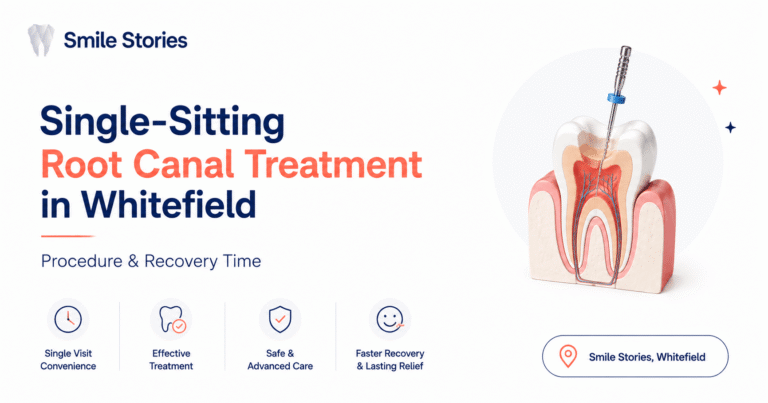
• Complete the canal filling (obturation) with gutta-percha in the same appointment if the case is suitable for single-sitting RCT
Step 8: Post-Treatment X-Ray
A final X-ray confirms that the canals are filled appropriately.
Step 9: Follow-Up and Crown Placement
After root canal treatment, the tooth requires a permanent restoration — typically a dental crown — to protect it from fracture. Arranged at a follow-up appointment.
TOTAL TIME: Generally 60–90 minutes for a straightforward case. Complex cases may take longer.
WHAT CAN YOU DO BEFORE SEEING AN EMERGENCY DENTIST?
1. Cold Compress
Apply an ice pack or bag of frozen peas wrapped in a cloth to the outside of your cheek for 15–20 minutes at a time. Helps reduce swelling and provides some pain relief. Do not apply ice directly to the skin.
2. Salt Water Rinse
Dissolve half a teaspoon of table salt in a glass of warm water and gently rinse your mouth. Has a mild antibacterial effect and can reduce gum irritation. Swirl gently — do not spit forcefully.
3. Over-the-Counter Pain Relief
Ibuprofen (an anti-inflammatory) is often more effective for dental pain than paracetamol because it targets both pain and inflammation. Follow dosage instructions on the packaging. Do not take medications you are allergic to or that conflict with existing prescriptions.
4. Avoid Temperature Extremes
Very hot or very cold food and drinks are likely to trigger sharp pain flare-ups. Room-temperature water and soft foods are better until you’ve been seen.
5. Don’t Chew on the Painful Side
Pressure on an infected or inflamed tooth worsens symptoms.
6. Elevation While Resting
Prop yourself up with pillows to keep your head elevated above heart level. This may reduce blood pressure to the inflamed area.
WHAT NOT TO DO:
- Do not place aspirin or any medication directly on the gum — this can cause a chemical burn
- Do not ignore a swelling that is spreading to your face, neck, or throat
- Do not delay seeking care because pain temporarily subsides — an abscess that “stops hurting” has not resolved
WHEN SHOULD YOU GO TO THE HOSPITAL INSTEAD?
GO TO A HOSPITAL EMERGENCY ROOM IF YOU EXPERIENCE:
- Difficulty breathing or swallowing — this can indicate that a dental infection has spread to the airway (Ludwig’s angina) — a life-threatening medical emergency
- Swelling extending into your neck, under your chin, or toward your eye
- High fever (above 39°C / 102°F) combined with severe tooth pain and swelling
- Significant facial trauma — fall, road accident, or blow that may involve jaw fracture or head injury
- Uncontrolled bleeding from the mouth that does not slow after 15–20 minutes of firm pressure
- Altered consciousness, confusion, or extreme weakness alongside dental pain
These situations are medical emergencies, not dental ones. Hospitals near Whitefield, Brookefield, and the broader East Bangalore corridor — including areas like KR Puram and Mahadevapura — have emergency departments equipped to manage spreading dental infections and facial trauma.
Do not drive yourself if you are in severe distress — call for help.
CAN TOOTH PAIN WAIT UNTIL MORNING?
WAITING UNTIL MORNING MAY BE ACCEPTABLE IF:
- Pain is moderate and controlled by over-the-counter medication
- There is no facial swelling, fever, or pus
- You can sleep, even if uncomfortable
- The pain is sensitivity-type (sharp, brief) rather than constant throbbing
- There has been no trauma to the tooth or face
DO NOT WAIT UNTIL MORNING IF:
- Pain is severe, constant, and not responding to pain relief
- There is any visible swelling of the face, cheek, or jaw — particularly if growing
- You have a fever alongside tooth pain
- You can see or feel pus near the tooth or gum
- There has been dental trauma (crack, knock, avulsion)
- You are having any difficulty breathing or swallowing
THE RISK OF WAITING WITH AN ABSCESS:
A dental abscess is a bacterial infection. Without treatment, the infection can spread to surrounding bone (osteomyelitis), to the soft tissues of the face and neck (cellulitis), or — in rare but serious cases — to the bloodstream (sepsis).
When in doubt, seek professional assessment. It is always better to be assessed and told you can safely wait than to wait and allow a manageable infection to escalate.
EMERGENCY DENTAL CARE IN WHITEFIELD: WHAT TO EXPECT
Whitefield is one of Bangalore’s most densely populated professional and residential corridors. The stretch from ITPL and Hope Farm through Kadugodi, Brookefield, and Varthur to Hoodi and Kundalahalli houses a large population — and dental clinics serving this area vary in their emergency availability.
WHEN SEEKING EMERGENCY DENTAL CARE IN WHITEFIELD:
Call ahead if at all possible.
Even clinics that advertise emergency services have limited late-night capacity. A call confirms the dentist is available and ensures you’re not waiting unnecessarily.
WHAT TO BRING:
- A valid ID
- Any previous dental records, X-rays, or treatment summaries
- Your health insurance card if you have dental coverage
- A list of current medications and known allergies
WHAT TO TELL THE DENTIST:
- When the pain started
- What makes it worse or better
- Whether there has been any swelling, fever, or discharge
- Any prior treatment on the affected tooth
- Your medical history and current medications
WHAT TO EXPECT AT THE CLINIC:
- A clinical examination and X-rays before any treatment recommendation
- An honest assessment of whether the situation requires immediate treatment or can be followed up the next business day
- Local anaesthesia for any procedure — you should not feel pain during treatment
For patients coming from surrounding localities — Seegehalli, Mahadevapura, AECS Layout, or Hoodi — travel time at night is typically shorter than during Whitefield’s notoriously congested daytime hours. The same applies to residents of Kundalahalli and Varthur who may find the night-time commute into central Whitefield manageable.
PREVENTING FUTURE ROOT CANAL EMERGENCIES
1. Regular Dental Check-Ups
A dentist examining your teeth every 6 months can identify cavities, cracks, and early pulp changes before they become emergency situations. A small filling placed today prevents a root canal tomorrow.
2. Early Cavity Treatment
Decay progresses. A cavity that requires a simple filling when first noticed may require root canal treatment and a crown if left untreated for months or years.
3. Dental X-Rays at Regular Intervals
Decay between teeth, below old fillings, and at the gum line is often invisible to visual examination. Periodic X-rays allow dentists to catch problems that cannot be seen directly.
4. Custom Mouthguards for Bruxism
If you grind your teeth at night, a custom-fitted night guard worn during sleep protects your teeth from the fractures and pulp damage that grinding causes over time.
5. Don’t Delay Recommended Treatment
If a dentist tells you that a tooth needs a root canal but you defer because you’re not in pain yet — you are accepting significant risk. What was a straightforward elective procedure can become a weekend or late-night emergency root canal.
6. Protect Your Teeth During Physical Activity
A sports mouthguard provides protection during contact sports and activities with fall risk — for adults as much as children.
7. Maintain Oral Hygiene Consistently
Brushing twice daily with fluoride toothpaste and flossing once daily removes the bacterial plaque that drives tooth decay and gum disease.
COMMON MYTHS ABOUT EMERGENCY DENTAL PAIN — DEBUNKED
MYTH 1: “If I can tolerate the pain, it’s fine to wait indefinitely.”
Tolerance of pain is not an indicator of infection severity. An abscess can grow and spread whether or not you’re feeling significant pain.
MYTH 2: “Antibiotics are all I need.”
Antibiotics manage spread but do not treat the source. This misconception leads many patients to delay necessary dental treatment with a false sense of security.
MYTH 3: “Root canal treatment is the most painful dental procedure.”
This is perhaps the most pervasive dental myth. Modern root canal treatment is performed under effective anaesthesia and is comparable in comfort to having a filling placed.
MYTH 4: “A swollen face will go away on its own.”
Dental infections are bacterial. Without treatment — either drainage, root canal therapy, or extraction — the bacteria remain active and the infection continues to spread.
MYTH 5: “Losing the tooth is simpler than root canal treatment.”
The gap left by a missing tooth requires management and leads to bone loss and shifting of adjacent teeth. Preserving the natural tooth through root canal treatment is almost always the preferable long-term outcome.