Being told you need a dental crown is usually a relief. It means your tooth can be saved. But what comes next often creates confusion.
Your dentist mentions zirconia, e.max, or PFM crowns — and suddenly you’re expected to decide on something that will sit in your mouth for the next 10–15 years.
Most patients ask the wrong question first: “Which crown is the best?”
The right question is: “Which crown is best for my tooth, my bite, and my long-term comfort?”
This guide explains the real differences between zirconia, e.max, and PFM crowns — without sales pressure, without jargon, and without half-truths.
Why Crown Material Choice Is Not a Small Decision
A dental crown is not a cosmetic decoration. It becomes part of your chewing system.
Every time you bite, grind, clench, or chew, your crown absorbs force. If the material isn’t chosen correctly, patients often experience:
- Cracks or fractures months later
- Chipped porcelain
- Sensitivity while chewing
- Dark gum lines near the crown
- Early replacement and extra expense
The material you choose directly affects strength, appearance, comfort, and lifespan.
Understanding Zirconia Crowns in Simple Terms
Zirconia crowns are made from zirconium dioxide — a material originally developed for orthopedic and joint implants. In dentistry, it is valued for one thing above all else: strength.
Zirconia crowns are extremely resistant to fracture, which makes them ideal for teeth that experience heavy chewing forces. This is why dentists commonly recommend zirconia crowns for molars, premolars, and teeth that have undergone root canal treatment.
Modern zirconia has evolved significantly. Earlier versions were opaque, but today’s layered and translucent zirconia can look surprisingly natural while maintaining durability.
For patients who grind their teeth, have strong bite forces, or want a crown that lasts many years without worry, zirconia is often the safest long-term option.
The trade-off is aesthetics. While zirconia looks good, it does not transmit light as naturally as e.max. In the back of the mouth, this doesn’t matter. In the front, it sometimes does.
What Makes e.max Crowns Different
e.max crowns are made from lithium disilicate glass-ceramic. Their defining feature is aesthetics.
Unlike zirconia, e.max allows light to pass through in a way that closely mimics natural enamel. This makes it the preferred choice for front teeth, smile makeovers, and cosmetic dentistry cases where appearance is critical.
When done well, an e.max crown is almost indistinguishable from a natural tooth — even under bright lighting or in photographs.
However, e.max is not as strong as zirconia. It performs beautifully in low-stress areas but is not ideal for patients who clench or grind their teeth heavily. On molars, especially after root canal treatment, e.max carries a higher risk of fracture over time.
In short, e.max prioritizes beauty over brute strength — and that trade-off must be respected.
What PFM Crowns Still Offer (and Where They Fall Short)
PFM crowns, or porcelain-fused-to-metal crowns, have been used for decades. They consist of a metal core covered with porcelain.
For many years, PFM crowns were the standard. They still work, and in certain situations, they remain an acceptable option — especially when budget is a concern.
However, PFM crowns come with limitations that modern patients should understand.
Over time, the metal core can show through as a dark line near the gums, especially if the gums recede slightly. The porcelain layer can chip, exposing metal underneath. Some patients also experience gum irritation due to the metal component.
While PFMs are functional, they are no longer considered the best option when metal-free alternatives are available.
Strength: Which Crown Handles Chewing Best?
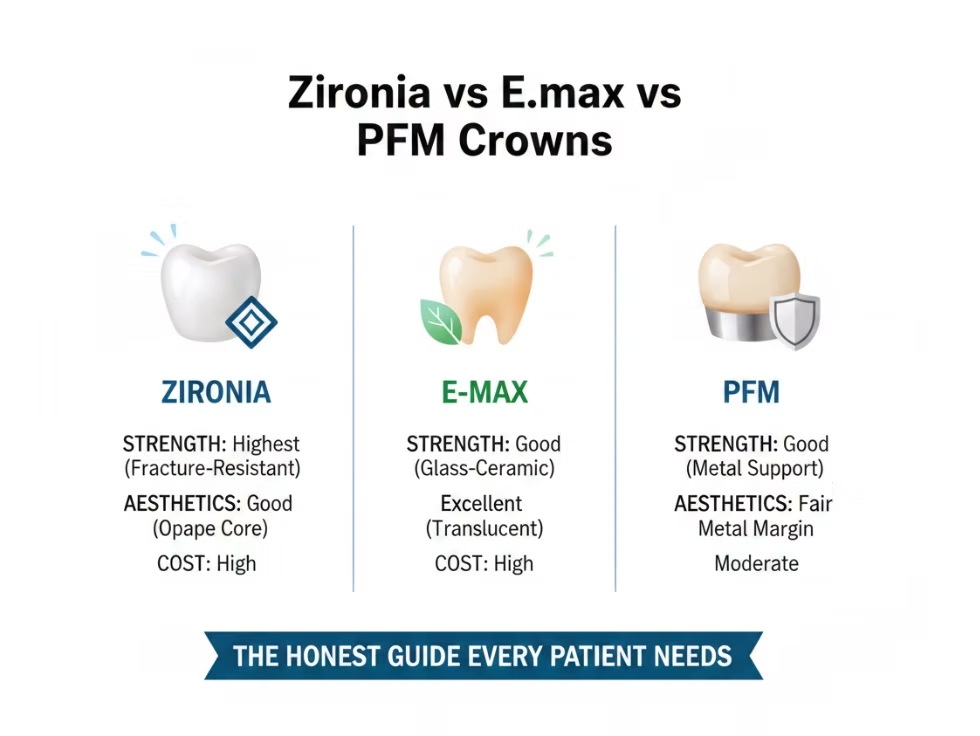
If strength is your top priority, zirconia is clearly superior.
Zirconia crowns withstand chewing forces better than both e.max and PFM. This is especially important for back teeth and teeth that have already been weakened by decay or root canal treatment.
PFM crowns offer moderate strength but rely on the metal core. e.max, while strong enough for many cases, is more vulnerable under heavy pressure.
For patients who grind their teeth or have a strong bite, zirconia provides peace of mind.
Aesthetics: Which Crown Looks the Most Natural?
When it comes to appearance, e.max leads.
Its translucency allows it to blend seamlessly with natural teeth, making it the top choice for visible areas. Zirconia comes close but is slightly less lifelike. PFM crowns rank lowest due to opacity and potential metal show-through.
If your crown is in the smile zone, aesthetics should carry more weight in your decision.
Durability and Longevity: Thinking Long-Term
A crown is an investment. Replacing a failed crown costs more than choosing the right one initially.
Zirconia crowns often last 10–15 years or more with proper care. PFM crowns typically last slightly less. e.max crowns can last many years when used in the right situations but are more sensitive to bite forces.
Longevity depends not just on material, but also on bite alignment, oral hygiene, and crown fit.
Cost: What Are You Really Paying For?
PFM crowns usually have the lowest upfront cost. Zirconia crowns fall in the mid-range. e.max crowns tend to be slightly higher due to lab precision and cosmetic detailing.
However, cost should be viewed in terms of value over time, not just initial price. A cheaper crown that fails early is ultimately more expensive.
How Dentists Actually Choose the Right Crown Material
A responsible dentist does not choose crown material based on price alone.
They consider:
- Tooth location
- Amount of remaining tooth structure
- Bite force and grinding habits
- Aesthetic expectations
- Gum health
- Long-term stability
When these factors are respected, crown failures are rare.
Common Mistakes Patients Make
Many problems arise because patients:
- Choose aesthetic crowns for high-stress areas
- Choose cheaper options for visible teeth
- Ignore grinding habits
- Rush the decision without understanding consequences
A crown should be selected based on function first, aesthetics second, and cost third.
Does Crown Material Affect Pain or Sensitivity?
When done correctly, crown material does not cause pain.
Discomfort usually results from poor fit, improper bite adjustment, or delayed crown placement after root canal treatment — not from the material itself.
With proper technique and digital planning, all three crown types can be placed comfortably.
So… Which Crown Is Best for You?
There is no universal answer.
Zirconia is best when strength and longevity matter most. e.max is best when appearance is the priority. PFM is best when budget constraints exist and aesthetics are secondary.
The right choice is the one that fits your tooth, your bite, and your future comfort.
Final Thought Before You Decide
Crowns are not temporary fixes. They are long-term restorations.
Choosing the correct crown material once is always better than replacing the wrong one later.
If you’ve been advised by a crown and are unsure which material suits your situation, a proper evaluation makes all the difference.